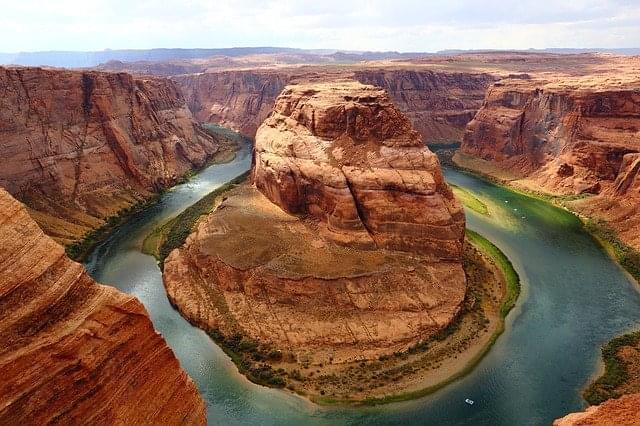
 Located in Arizona, the Grand Canyon is an enormous natural park formed by several layers of red rock and a giant gorge 1,600 metres deep and 450 km long, created by the Colorado River over more than 5 million years.
Until the Roosevelt presidency, the area was owned by the American Indians, who today hold power over only a small area.
It isconsidered one of the wonders of the world and every year attracts millions of visitors who come here to admire this spectacle from one of the many viewpoints or from above on a scenic helicopter flight.
Where it is located
The Grand Canyon is located in northern Arizona, the American state that borders Mexico to the southeast, Lower California to the southwest, Utah to the north, New Mexico to the east and Nevada to the northwest.
The park covers more than 4,927 square kilometres, is 446 km long, 1,857 metres deep and ranges in width from 500 m to 29 km and, according to geologists, contains soil layers belonging to the Proterozoic and Paleozoic periods.
How to get there
Nearest airports: Las Vegas McCarran International Airport (200 km from West Rim/Grand Canyon Skywalk, 452 km from South Rim); Phoenix Airport (375 km from South Rim/Grand Canyon Visitor Center); Flagstaff Pulliam Airport (156 km from South Rim/Grand Canyon Visitor Center); Grand Canyon National Park Airport (30 km from South Rim/Grand Canyon Visitor Center).
Getting there from Las Vegas: By air from Boulder City Airport to Grand Canyon National Park airport in 1 hour with"Grand Canyon Airlines" (prices from $180.00 / €163.00).
Alternatively,"Bundu Buses" connect Las Vegas to the Grand Canyon South in 6 hours (from $95.00 / €85.00), while the West Rim entrance takes about 2 hours with organised buses - book your bus tour from Las Vegas online.
Finally, by car it takes about 4 hours for the South entrance and 2 hours for the West entrance; the cost of a rental is about $50.00 per day (€45.00).Getting there from Phoenix:"Groome" buses from the airport connect Phoenix to the South entrance in about 6 hours with change in Flagstaff (€60.00 approx.). By car it takes about 4 hours and the daily rental cost is about $50.00 / €45.00; alternatively organised day tours - book your tour online
Gettingthere from Flagstaff: by car from the airport it takes about 1 hour 40 minutes to get to the South entrance of the Grand Canyon. Alternatively, the Groome bus takes 2 hours and 10 minutes from Flagstaff Amtrak to the South entrance (approx. $45.00 / €40.00). Or with organised excursions - book your tour online
How to get there from Williams: train from Williams Depot at 9:30 am and arrives at Grand Canyon Depot station at 11:45 am. The train departs Grand Canyon at 15:30 and arrives in Williams at 17:45. A second departure may be offered during peak season, please visit the official website. Prices around $77.00 / €69.00. By car it takes 1 hour and 10 minutes.
When to go? Info on climate and best time
Month | Average temperatures (min/max) | Precipitation (days/mm) |
|---|---|---|
January | -2 / 7° | 5 days / 17 mm |
February | 0 / 8° | 5 days / 17 mm |
March | 4 / 13° | 6 days / 22 mm |
April | 6 / 17° | 3 days / 6 mm |
May | 9 / 21° | 2 days / 3 mm |
June | 15 / 29° | 1 day / 3 mm |
July | 19 / 30° | 5 days / 21 mm |
August | 19 / 30° | 6 days / 24 mm |
September | 17 / 26° | 4 days / 22 mm |
October | 10 / 19° | 3 days / 17 mm |
November | 4 / 13° | 3 days / 17 mm |
December | -1 / 7° | 4 days / 25 mm |
Climate: semi-desert with considerable temperature differences between day and night. There are considerable differences between the North Rim (which is 300 m higher and is closed in winter) and the South Rim. Average temperatures between November and March go below zero at the South Rim, while at the North Rim from October to April and snow showers are frequent. In the interior of the Canyon, on the other hand, summer temperatures are very high and exceed 40°.
Best time: spring and autumn as daily temperatures are pleasant and rainfall is rare. Summer is also a good time although during the day inside the Canyon it reaches 40°. The best month is September.
Period to avoid: winter because of the harsh weather conditions and heavy rain and snowfall. In addition, the North entrance is closed from October to April. The worst month is January.
Clothing/Equipment: In spring, a heavy fleece for the morning and evening and comfortable, cool clothing for the day. In summer, light clothes and in winter heavy mountain equipment. Always remember a sun hat, sun cream and water supplies.
Timetables and entrance fees
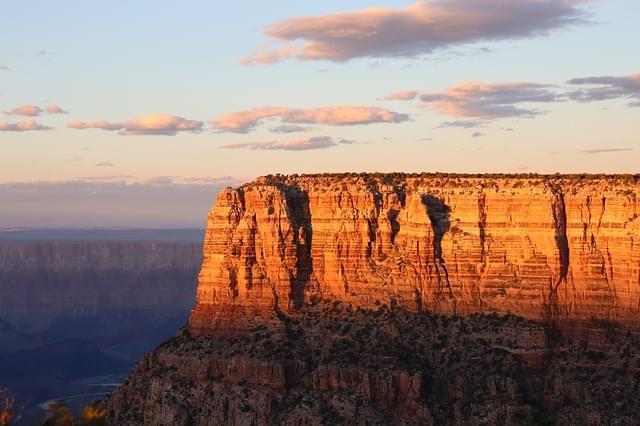 The park has three entrances: the Grand Canyon North Rim, the Grand Canyon South Rim and the Grand Canyon West.
The National Park Service offers free admission on certain days each year. It is recommended to book online during peak season.
Hours and Costs Grand Canyon North Rim: open May 15-October 15 8am - 6pm; admission is $35.00 / €32.00 by car, $30.00 / €27.00 by motorbike and $20.00 / €18.00 by shuttle, foot, train and bicycle.
The ticket is valid for seven days and allows you to visit both the northern and southern rim of the canyon. It can be purchased directly at the entrance stations or at some outdoor businesses.Times and Costs Grand Canyon South Rim: Open 24 hours a day, 365 days a year. Admission costs $35.00 / €31.00 with cars, $30.00 / €27.00 with motorbikes, and $20.00 / €18.00 for those entering by shuttle bus, via the river on private rafting vehicles, on foot or by bicycle.
The ticket is valid for seven days and allows you to visit both the northern and southern rim of the canyon and can be purchased directly at the entrance stations or at some outdoor businesses.Times and Costs Grand Canyon West: 365 days a year 7am - 7pm. Basic admission costs $50.00 / €45.00 and includes shuttle bus access to viewpoints but does not provide access to the Skywalk.
Legacy Gold includes access to the Skywalk, a lunch of your choice at one of the two viewpoints as well as use of the shuttle bus between stops and costs $80.00 / €72.30.
What to see in the Grand Canyon: park areas and highlights
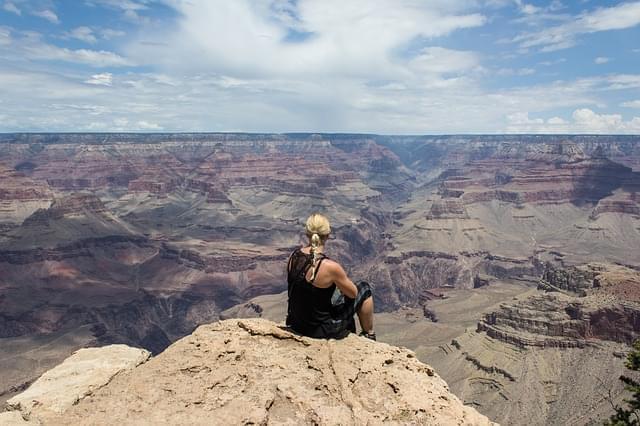 The park comprises three entrances, which divide it into three parts:
the North Rim which is located in the most remote part of the Canyon near the Utah border and is reached via Route 67;
the South Rim within Arizona's borders, which occupies the largest part of the park and is reached via Route 64;
and the West Rim, unlike the other two is managed by the Hualapai Indians and is independent of the North and South Rim which are under the protection of the National Park Service.
While the North Rim and South Rim can also be visited independently in one's own car, motorbike, on foot and using the park's free shuttle bus, for the West Rim it is compulsory to leave your vehicle in the car park and use the shuttle bus that runs every 15 minutes.
The North and South Rim are a four-hour drive away and those who wish can use the park shuttles that leave from the North Rim towards the South Rim every day from May to October. It is also possible to visit just one of these areas, especially if you are short on time.
1 - Grand Canyon South Rim
Hopi House at Grand Canyon Village, South Rim
Mather Point, one of the most beautiful viewpoints in the South Grand Canyon
Yavapai Point, one of the most beautiful viewpoints in the South Grand Canyon
Yaki Point, one of the most beautiful viewpoints in the South Grand Canyon
Desert View Watchtower, South Rim
Hermit Road, Trailview Overlook, South Rim
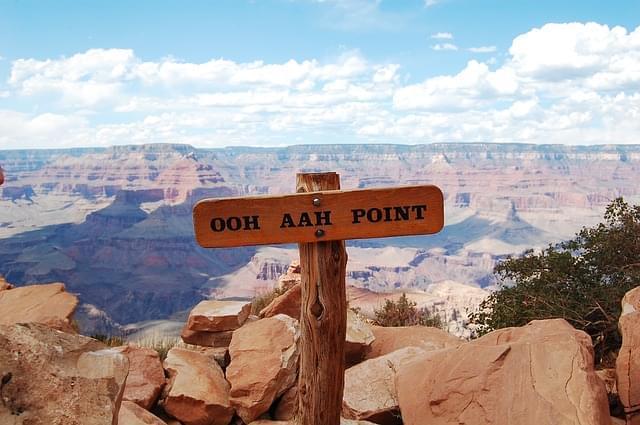
Ooh Aah Point, South Kaibab Trail, South Rim
Sunset at Hopi Point, South Rim
1/8
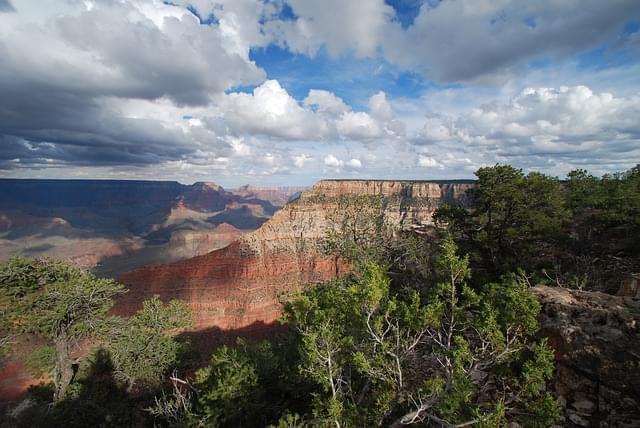 It is 96 km from Williams and can be reached in just under 2 hours by car, bus or the scenic train. The nearest airport is Phoenix.
It isthe most visited and famous part and is recommended for those who have never seen the Grand Canyon;
Due to the large number of visitors, especially in the summer months, it is advisable to purchase packages and services at least 8 months in advance and those who wish can stay inside the park, in one of the 7 hotels present or in the camping areas.
In addition, this part of the park is equipped with many amenities: tourist office, ATM, post office, clinic, restaurants and bars, bookshop and gift shop.
In addition to the various viewpoints and vantage points, it is also possible to go on numerous guided hikes such as the Rim Trail along the canyon, horseback riding, bicycle tours and scenic helicopter flights.
Grand Canyon Village is the transition area for getting from one side of the Canyon to the other or to the services available in the park.
Mather Point, Yavapai Point and Yaki Point, which can only be reached by park shuttles in high season, are the most beautiful viewpoints in the South Grand Canyon.
Desert View Watchtower looks like an ancient building on the surface, but inside, as well as visiting the paintings that evoke American Indian culture, climb the 85 steps to view the spectacular Grand Canyon from above (tower hours 8am-5:30pm).
Hermit Road can only be travelled by car from December to February, during the other months you must use the free shuttle bus. Along these 11 km you stop at 9 beautiful scenic overlooks: Trailview Overlook, Maricopa Point, Powell Point, Hopi Point, Mohave Point, The Abyss, Monument Creek Vista, Pima Point, Hermits Rest.
South Kaibab Trail is a variable 3-10 km route with elevation gain of between 230 and 620 metres that starts at Yaki Point and allows you to hike between chasms and wonderful viewpoints. It is recommended to do it early in the morning to avoid the scorching heat. There are three stops: Ooh Aah Point, Cedar Ridge and Skeleton Point.
Mather Point or Yaki Point, are the most beautiful places to enjoy the rising day.
Hopi Point, definitely crowded but still one of the most beautiful places to watch the sunset.
2 - Grand Canyon North Rim
Bright Angel Point is the most famous viewpoint on the North Rim
North Kaibab Trail, a challenging hike to the Colorado River
Point Imperial, North Rim, the highest observation point in the entire Grand Canyon
Roosvelt Point, on Cape Royal Road, North Rim
Walhalla Overlook, observation point on Cape Royal Road, North Rim
View of Wotans Throne on Cape Royal Road, North Rim
1/6
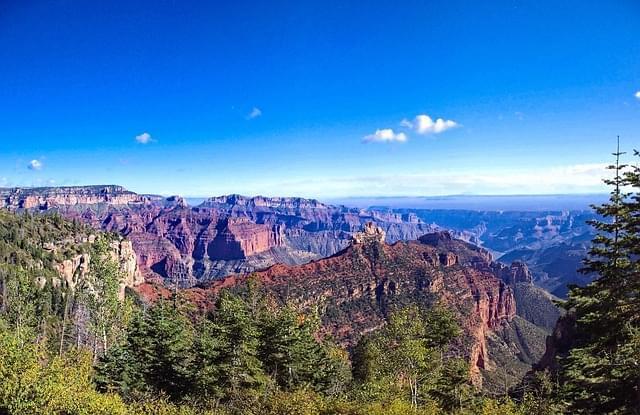 This is themost remote part of the park, little known and much less crowded than the South Rim.
It is thewildest part, services are reduced to the bare essentials and it is ideal for those who want to go horseback riding, cycling and guided night hikes.
This part is open from May to October and accessible via Route 67 and cannot be visited on the same day as the South Rim; however, the ticket is the same and is valid for 7 days from the date of purchase.
The nearest town is Page connected to the North Rim via Scenic drive US89A (approximately 3 hours).
This area can be visited by car, on foot, by bicycle or with the free shuttles.
Bright Angel Point is the most famous viewpoint, which can be reached on foot from the visitor centre in 20 minutes via a paved trail that winds along the crest of a ridge.
North Kaibab Trail is the most challenging hike and recommended only for experienced hikers, leading from the top of the ridge to the Colorado River. The trail is about 22 km one way and at least two days are recommended. However, if you do not have time, you can reach closer viewpoints such as Coconino Overlook at 1.1 km, supai Tunnel at 3.2 km.
Point Imperial is reached by turning off Cape Royal Road after 8 km to Point Imperial Road.
The overlook overlooks the north-eastern portion of the canyon and is the highest observation point in the entire Grand Canyon.Roosvelt Point Overlook, on Cape Royal Road, is an observation point that offers impressive views of the typical North Rim landscape.
Walhalla Over look is a noteworthy observation point on Cape Royal Road that overlooks the canyon panorama and from where you can see a Colorado delta called Unkar.
From here it is possible to reach Walhalla Glades Pueblo, an archaeological site that preserves some ruins of a 900-year-old Indian village.Cape Royal is a 1.3 km A/R trail from where you can see theAngel Window and the impressive Wotans Throne peak that stands out in a vast open panorama of the canyon.
3 - Grand Canyon West Rim
The Skywalk, the West Rim's main attraction, at Eagle Point
Guano Point is the point from which to enjoy the best views of the West Rim
The Highpoint Hike at Guano Point, West Rim
Eagle Point, West Rim, Colorado River view
1/4
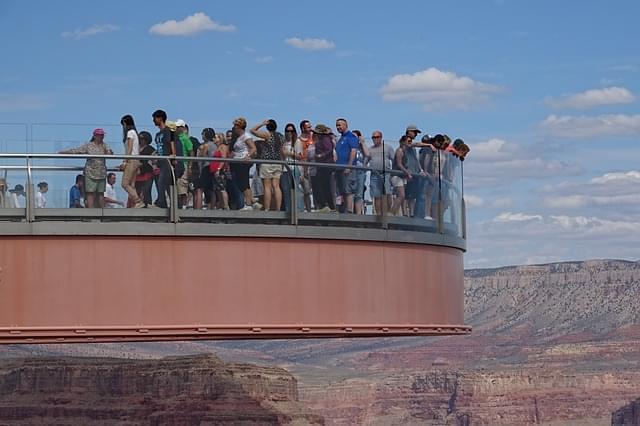 This isthe most convenient entrance for those coming from Las Vegas because it is closer and attracts many visitors for the Skywalk, the horseshoe-shaped observation deck.
This whole area is managed by the Hualaai Indians, so the North and South Rim entrance ticket is not valid and the park card cannot be used either.
Furthermore, this area is only accessible using the shuttles available every 15 minutes. To facilitate the visit, there are various tours departing from Las Vegas: sunset tour; bus tour; and helicopter tour.
The Skywalk is the park's main attraction located at Eagle Point and characterised by a transparent platform that juts out along the canyon rim.
Guano Point is the point from which to enjoy the best views of the West Rim; a short hike along the Highpoint Hike provides a 360-degree view of the entire Colorado River area.
Helicopter or scenic plane tours fly over the Grand Canyon; at the end of the flight you can visit Guano and Eagle Point by land.
How to visit Grand Canyon: where to stay, routes and how to get around
Main itineraries
 The park covers a very large area and it is impossible to see everything in the same day.
Tourists usually decide to visit only the part closest to the town where they are staying; others decide to spend several days so as to be able to see at least two areas.
Hiking and trekking enthusiasts are the ones who stay longer in the Grand Canyon as they hike for several days following the various trails.
Here are the routes we recommend:
South Rim Grand Canyon: one or two days to discover the main points of the park by car or bus. Usually you drive along Hermit Road and stop at Trailview Overlook, Maricopa Point, Powell Point, Hopi Point, Mohave Point, The Abyss, Monument Creek Vista, Pima Point, Hermits Rest.
The advice is to stay at least one night in the park to witness the sunrise and sunset.North Rim Grand Canyon: for those who want to see wilderness and uncrowded places. One day is enough if you are not trekking to visit Bright Angel Point and drive along the Cape Royal Road stopping at the various viewpoints and doing the Cape Royal Trail.
North and South Grand Canyon: at least three days and two nights are required to visit both sides. The first day you visit the North Rim, then by a shuttle organised by the park, in 4 hours you reach the South where you stay overnight and the following day you visit the main attractions
West Rim Grand Canyon is visited starting from Las Vegas in one day and allows you to see the Skywalk and Guano Point, as well as fly over the Canyon on a scenic flight.
The entireGrand Canyon: A minimum of four days is required to visit the entire park. The first day you visit the North Rim, then move to the South and finally reach the West Rim Grand Canyon.
Where to stay
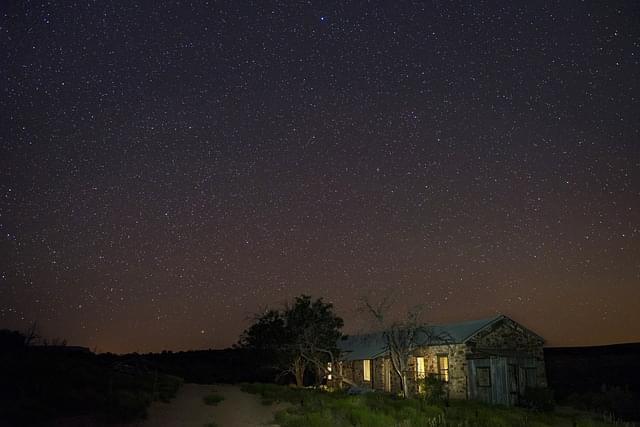 The best places to stay are thehotels and campsites within the park, which are the most expensive but also the first to be overbooked.
In the South Rim there are 3 campsites and 7 resorts, alternatively if you can't find space you can choose facilities a few kilometres from the entrance or stay overnight in Williams which is 100 km away or in Tuba City 95 km away.
In the North Rim, on the other hand, there are only 1 campsite and 1 hotel to be booked well in advance. Or you can stay in facilities 20/30 km away (also often full) or in the town of Kanab 125 km away.
Finally, at the West Rim, the only structure is the Hualapai Ranch, but visitors often arrive from Las Vegas in the day or sleep in Kingman, about 110 km from the entrance.
Getting around
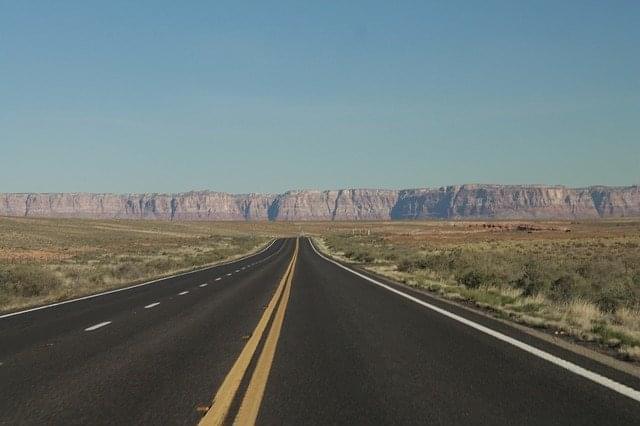 Although at off-peak times it is possible to enter the North and South areas with your own car, it is advisable to always move around the park with the free shuttle buses that make continuous stops and stops that allow you to get on and off when you want.
These buses are also suitable for those with disabilities or in wheelchairs.
For the West Rim, however, it is always necessary to use the shuttles provided by the park and leave your car outside.
To travel from the North to the South entrance there are daily shuttles that take 4 hours, while to reach the West you need your own car.
How much does it cost to visit the Grand Canyon? Prices, offers and advice
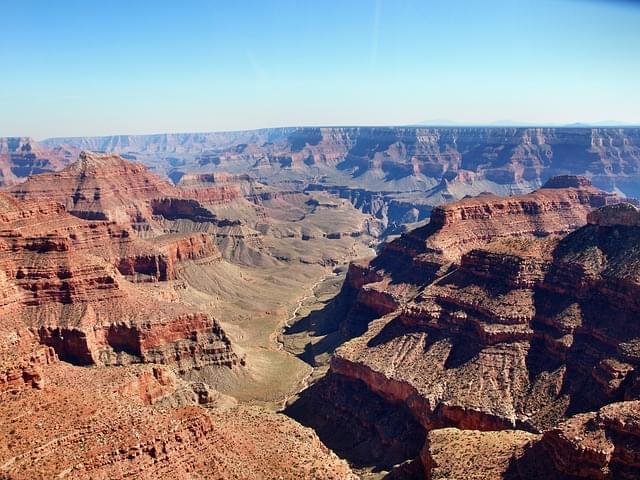 Visiting the Grand Canyon, like other American parks, is quite expensive, especially if you decide to stay in the interior and make the various excursions by helicopter, horseback or scenic plane.
The best thing if you want to save money is to book well in advance and sleep in the facilities just outside the parks. If you then want to go on excursions, consider that panoramic flights cost around €200.00 / €250.00 per person.
If you are staying in Las Vegas, group tours can be worthwhile.